Elon Musk: How the World’s Richest Person Built an $839 Billion Empire
At $839 billion, Elon Musk is not just the richest person in the world. He is richer than the next two people on the Forbes list combined. This is the story of how he got there.

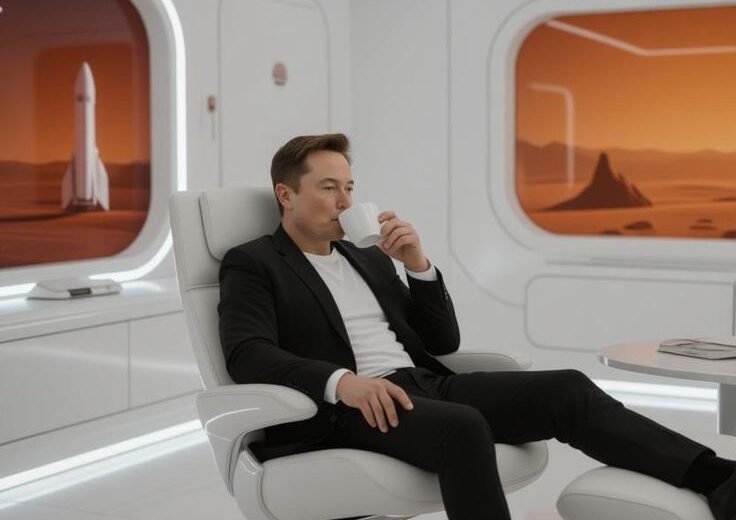
At $839 billion, Elon Musk is not just the richest person in the world. He is richer than the next two people on the Forbes list combined. This is the story of how he got there — and what it means for the rest of us.
There is a scene that captures Elon Musk better than almost any other. It is 2008. Tesla is weeks from bankruptcy. SpaceX has just suffered its third consecutive rocket failure. Musk, who has already invested his entire PayPal fortune into both companies, is essentially broke. He loans Tesla a final $40 million from money he no longer technically has, just to keep it alive.
Seventeen years later, he is worth $839 billion. He controls the world’s most valuable electric vehicle company, the most successful private space enterprise in history, the world’s largest satellite internet network, a social media platform used by heads of state and billions of ordinary people, and one of the most advanced AI companies on earth.
The Tesla Bet That Almost Wasn’t
Musk did not found Tesla. He invested in it in 2004, a year after Martin Eberhard and Marc Tarpenning incorporated the company, and became chairman of the board. By 2008, internal dysfunction, ballooning costs, and the financial crisis had brought Tesla to the edge of collapse.
The decision to bet everything on Tesla — literally, Musk has said he used the last of his personal liquidity to fund the 2008 bridge round — is probably the single most consequential financial decision made by any private individual in the 21st century.
Tesla went on to become the most valuable car company in the world, peaking at over a trillion dollars in market capitalization. It fundamentally changed the automotive industry, forcing every major manufacturer on earth to accelerate electric vehicle programs by a decade or more.
SpaceX: The Rocket Company That Rewrote History
When Musk founded SpaceX in 2002, he had a simple stated goal: make humanity a multi-planetary species. The rocket industry considered this delusional. NASA had spent billions developing rockets that cost $500 million per launch. SpaceX aimed to bring that cost under $10 million.
The Falcon 9 reusable rocket achieved what many aerospace engineers considered impossible: recovering and re-flying orbital-class rocket boosters. Starlink satellite internet now has over 6 million active subscribers globally. It generates billions in annual recurring revenue and may eventually be worth more than Tesla itself.
xAI: The AI Play
Musk founded xAI in 2023 with the explicit goal of building an AI that is maximally curious and truth-seeking. Grok, xAI’s large language model, has grown rapidly and is integrated across X’s platform.
xAI’s Colossus computing cluster — built in Memphis with 200,000 NVIDIA H100 chips — is one of the largest AI training facilities in the world. The compute advantage this provides cannot be overstated: in AI, training compute is currently the primary determinant of model capability.
What $839 Billion Actually Means
To understand the scale of Musk’s wealth: $839 billion is more than the annual GDP of Poland. It is more than the combined market capitalization of Goldman Sachs, Morgan Stanley, Citigroup, and Wells Fargo. It is enough to fund NASA’s entire annual budget for 40 years.
When something is important enough, you do it even if the odds are not in your favor.
— Elon Musk
In 2026, Elon Musk’s story is not finished. SpaceX has not yet reached Mars. X has not yet become a super-app. xAI has not yet produced what Musk considers a genuinely curious machine intelligence. The man who nearly went broke in 2008 is still building. And the world, whether it wants to or not, is paying attention.
