Jensen Huang and the $3 Trillion Bet That Powered the AI Revolution
Every major AI system in the world — ChatGPT, Gemini, Claude, Grok — runs on NVIDIA hardware. Jensen Huang saw this coming twenty years before anyone else. Here is how.

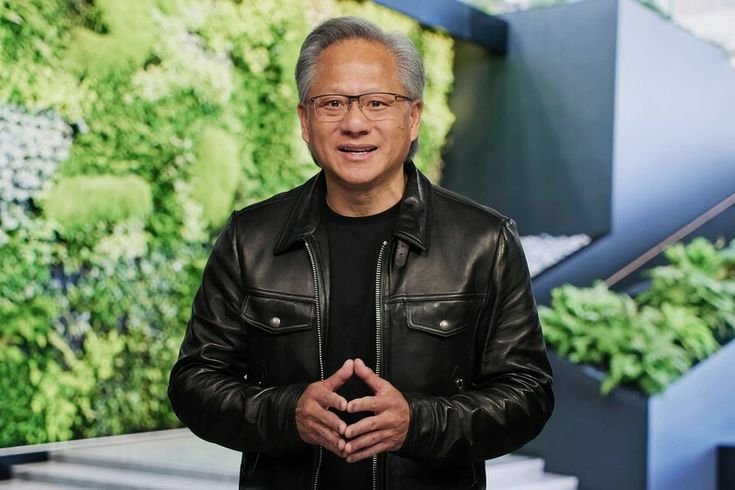
Every major AI system in the world — ChatGPT, Gemini, Claude, Grok — runs on NVIDIA hardware. Jensen Huang saw this coming twenty years before anyone else. The question is: how?
In 2006, Jensen Huang made a decision that most technology CEOs would not have made: he invested heavily in a software platform called CUDA — Compute Unified Device Architecture — designed to allow NVIDIA’s gaming graphics chips to run general-purpose computing tasks. Gaming was NVIDIA’s business. There was no guarantee that general-purpose GPU computing would amount to anything commercially.
It took nearly a decade for that bet to start paying off. By 2012, when a deep learning model called AlexNet used NVIDIA GPUs to win an image recognition contest by a margin so large it shocked the academic world, the AI era had begun — and NVIDIA was already its foundational infrastructure.
The CUDA Moat
What makes NVIDIA’s position so defensible is not the hardware itself — eventually, competitors will build chips that match NVIDIA’s raw performance. What makes it defensible is CUDA: the software ecosystem built up over 18 years that AI researchers worldwide have built their work on top of.
Switching from NVIDIA to an alternative chip architecture requires rewriting enormous amounts of code. The switching costs are not just financial — they are temporal. In a field where being months behind can mean missing an entire generation of AI progress, the cost of switching is effectively prohibitive for most major players.
The Personal Story Behind the Empire
Jensen Huang was born in Taiwan and moved to the United States at age nine. He washed dishes and cleaned toilets at a Denny’s while studying electrical engineering. He co-founded NVIDIA in 1993 at 30 years old with $40,000 and a conviction that 3D graphics would become the dominant visual medium.
He has led NVIDIA for 33 consecutive years — an almost unheard-of tenure in technology. His management philosophy is distinctive: he advocates for radical transparency, direct confrontation of uncomfortable truths, and what he calls “the speed of light” decision-making.
What Comes Next
NVIDIA’s dominance in AI training chips is well established. The next battleground is AI inference — the compute required to run AI models after they’ve been trained. This is a larger, more distributed market, and it is where competitors including AMD, Intel, and custom silicon from major cloud providers are most aggressively competing.
At $154 billion personally and with NVIDIA brushing $3 trillion in market cap, Jensen Huang has completed one of the most improbable wealth creation journeys in technology history. The Denny’s dishwasher who became the architect of the AI age.