The 10 Most Influential Entrepreneurs of 2026
A record 3,400+ billionaires. A $20 trillion wealth pool. And at the center of it all — ten individuals whose decisions are reshaping industries, economies, and the future of human civilization.

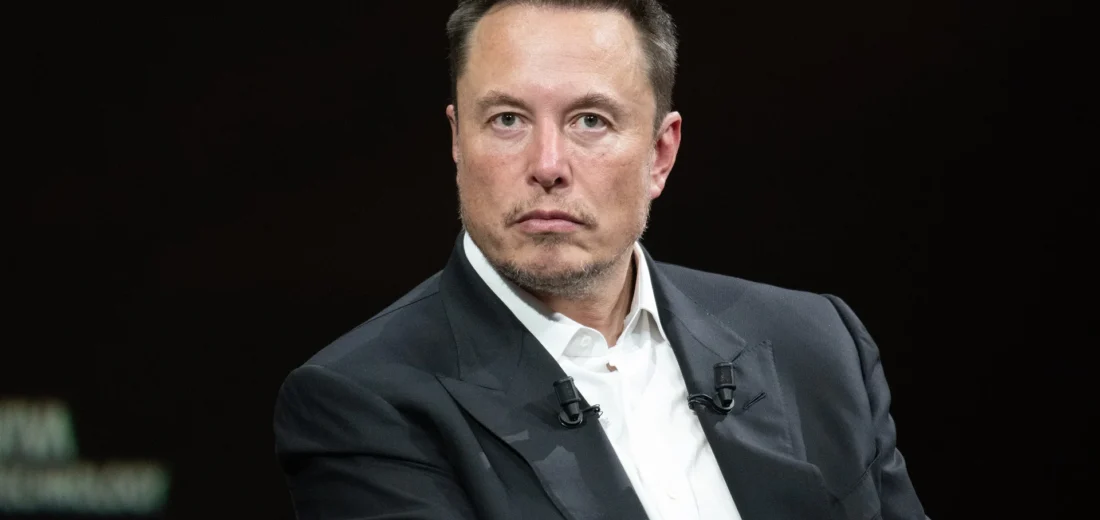
A record 3,400+ billionaires. A $20 trillion wealth pool. And at the center of it all — ten individuals whose decisions are reshaping industries, economies, and the future of human civilization.
The 2026 Forbes Billionaires List tells a story that goes beyond net worth. It is a chronicle of audacity — of people who saw the world differently and rebuilt it in their own image. This year’s most influential entrepreneurs aren’t just wealthy. They are consequential. Their companies define how we move, communicate, invest, and think.
We ranked these ten not on wealth alone, but on impact — on the breadth of industries they influence, the scale of problems they are solving, and the generational significance of their work.
1. Elon Musk — $839 Billion
There is no entrepreneur on earth with a larger footprint than Elon Musk in 2026. With an estimated net worth of $839 billion according to the Forbes 2026 Billionaires List, Musk is in a financial class entirely his own — his closest rival, Larry Page, trails by nearly $600 billion.
Tesla continues to dominate the electric vehicle market. SpaceX completed its first crewed Mars mission preparation flight in late 2025. X (formerly Twitter) has become a primary battleground for political and business discourse globally. Neuralink received its first expanded FDA approval. And Grok, xAI’s large language model, is now competing directly with OpenAI’s GPT series.
Whatever one thinks of Musk personally, no honest accounting of entrepreneurship in 2026 can omit him. His footprint spans transport, energy, space, AI, social media, and neurotechnology — simultaneously.
2. Jensen Huang — The Architect of the AI Age
If Elon Musk is the most visible entrepreneur of 2026, Jensen Huang of NVIDIA may be the most important. While Musk captures headlines, Huang quietly built the infrastructure layer upon which the entire AI revolution runs. NVIDIA’s H100 and Blackwell GPU chips have become the most strategically valuable hardware on earth — more sought after than oil in certain quarters.
With a net worth of $154 billion and NVIDIA’s market capitalization repeatedly brushing the $3 trillion mark, Huang has built one of the most valuable companies in the history of American capitalism. Every major AI model — GPT, Gemini, Claude, Grok — trains on NVIDIA silicon.
3. Mark Zuckerberg — The Comeback
Two years ago, many wrote off Mark Zuckerberg. The metaverse pivot had cost Meta hundreds of billions in market cap. Advertisers were fleeing. Regulators were circling. Then Zuckerberg did something remarkable: he cut 21,000 jobs, declared a “year of efficiency,” refocused on advertising and AI, and rebuilt Meta into one of the most profitable companies on earth.
In 2026, Meta’s AI Llama models are among the most widely deployed open-source AI systems in the world. Meta Ray-Ban smart glasses sold over 10 million units in 2025. Instagram and WhatsApp continue to dominate global social engagement. Zuckerberg, now $222 billion rich, has re-established himself as one of the canniest operators in Silicon Valley.
4. Jeff Bezos — The Empire Builder
Jeff Bezos stepped back from Amazon’s day-to-day operations but remains one of the most consequential figures in business. Amazon Web Services generates more profit than the entire retail business. Blue Origin successfully launched its first orbital mission in 2025. The Washington Post remains one of America’s most influential media properties.
At $224 billion, Bezos continues to operate at the highest levels of business strategy. His philosophy — long-term thinking over short-term gain — remains one of the most studied frameworks in business schools worldwide.
5. Patrick Collison — The Quiet Titan
Patrick Collison co-founded Stripe in 2010 at MIT and by 2026 has built one of the world’s most important financial infrastructure companies. Stripe processes hundreds of billions in payments annually and has expanded into lending, banking-as-a-service, and business financial management.
What makes Collison exceptional is not just what he built, but how he thinks. His public writing on progress, science, and long-term civilizational thinking has made him one of the most intellectually influential entrepreneurs of his generation.
6. Brian Chesky — The Reinvention Blueprint
Airbnb’s Brian Chesky almost lost everything during COVID when travel collapsed overnight. Instead, he used the crisis to radically simplify the company, cut bureaucracy, and re-center on what Airbnb does best. In 2026, Chesky’s approach to management — obsessive focus, rejection of empire-building, and direct involvement in product design — has become required reading for founders.
7. Sara Blakely — The Self-Made Blueprint
Sara Blakely founded Spanx with $5,000 in savings and no background in fashion or business. By 2026, she has built a multi-billion dollar empire and remained one of the most visible advocates for female entrepreneurship globally. Her investment platform backs female-founded businesses that traditional VC largely overlooked.
8. Whitney Wolfe Herd — Building on Her Own Terms
Whitney Wolfe Herd founded Bumble in 2014 and in 2026 leads a platform with hundreds of millions of users and a renewed strategic vision focused on safety, authentic connection, and AI-powered matching. Her journey — from lawsuit to IPO to ongoing leadership of a billion-dollar company — is one of the defining entrepreneurship stories of the decade.
9. Sam Altman — The AI Whisperer
No single individual has done more to shape public understanding of artificial intelligence than Sam Altman. As CEO of OpenAI, Altman has navigated boardroom coups, regulatory battles, and the dizzying pace of AI development to keep OpenAI at the frontier of the technology it pioneered. ChatGPT remains the fastest-growing consumer application in history.
10. Alex Hormozi — The New Blueprint for Influence
Alex Hormozi built a portfolio of companies generating hundreds of millions in annual revenue — and then gave away his entire playbook for free. His books and social media presence reach tens of millions monthly. Hormozi represents a new kind of entrepreneurial influence: one built not on secrecy, but on radical transparency.
The entrepreneurs on this list share one trait above all others: they build at a scale that forces the world to adapt to them. In 2026, that is the defining characteristic of consequential entrepreneurship